Your mind is going to overthink.You don't have to go with it.
Learn the simple practice of stepping back, so you can notice what your mind is doing before it carries you away.
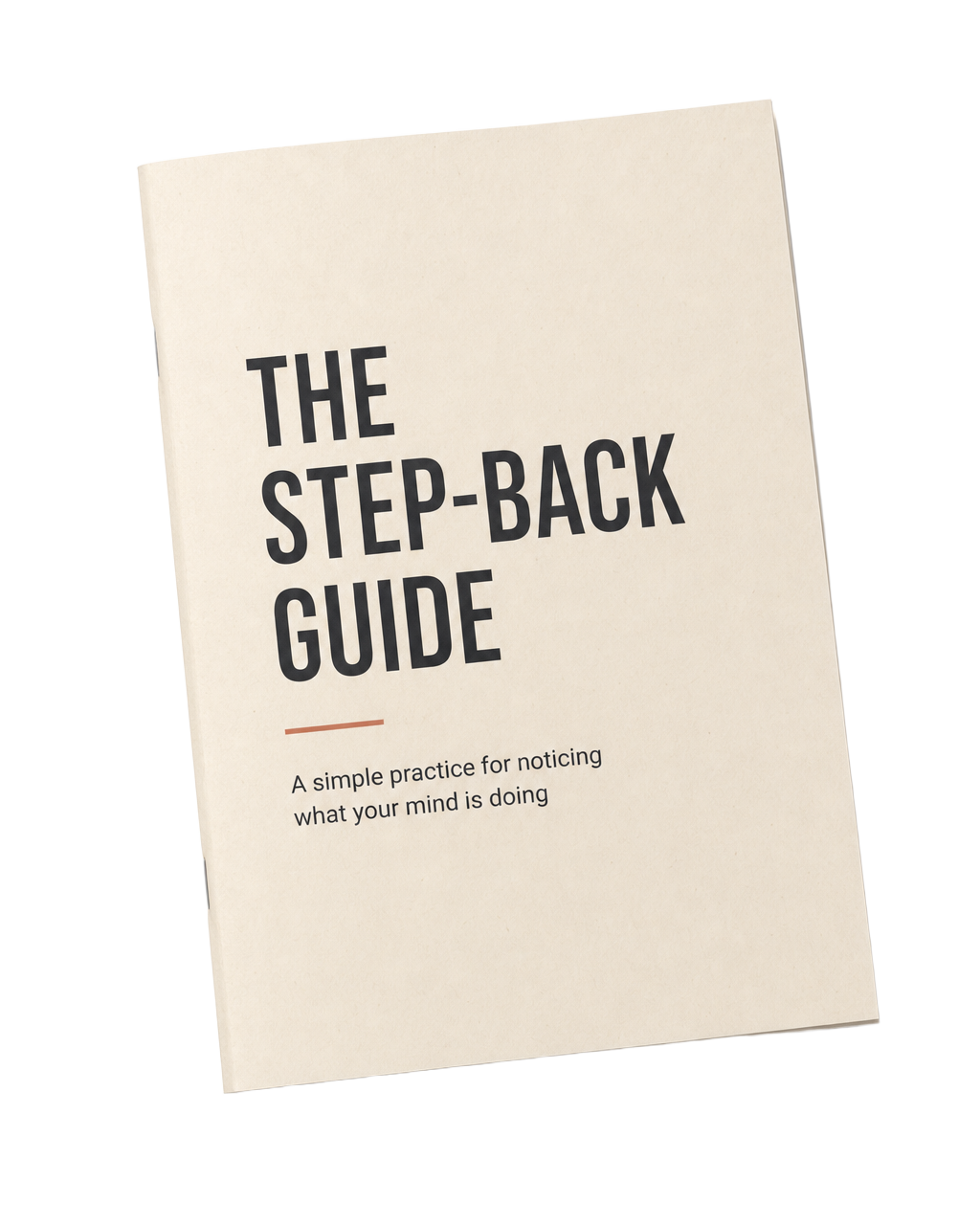
Get the free Step-Back Guide
Does your mind do this?
- Replays a conversation from three days ago.
- Worries about something that hasn't happened.
- Writes an entire story around an unanswered text.
- Rehearses arguments you'll probably never have.
- Turns one uncomfortable thought into twenty more.
That's your mind doing what minds do.
The problem isn't that these thoughts appear. The problem starts when we automatically get carried away by them.
Step back and look at your mind
Stepping back doesn't mean ignoring your thoughts, suppressing them, or trying to force yourself to think positively.
It means noticing:
"My mind is doing something right now."
That small shift can create space between the thought and your response. The Step-Back Guide shows you how to begin practicing this in everyday life.
A simple guide you can use right away
The Step-Back Guide is short and practical, made to be printed, saved, or kept somewhere you'll actually see it.
- 01Notice when your mind has taken over.
- 02Create a little distance from automatic thoughts.
- 03Respond more deliberately instead of automatically reacting.
Try stepping back.
You don't need to fix your mind. Start by noticing what it's doing.

The idea comes from
It's Not Your Fault. It's Your Default.
Your mind worries, predicts, compares, remembers, and reacts automatically. That's not a personal failure. It's what minds evolved to do.
In It's Not Your Fault. It's Your Default., Tim Tamashiro explores why the mind creates unnecessary suffering, and how learning to step back can help us live a little lighter.
Tim Tamashiro is an author, speaker, former national radio host, and former Buddhist monk. His previous book, How to Ikigai, has been published internationally.
His work explores a simple question:
How can we understand our minds well enough to carry life more lightly?
Your mind will keep talking.You can learn to step back.
Get the free Step-Back Guide.